Your voice can now say things you never said
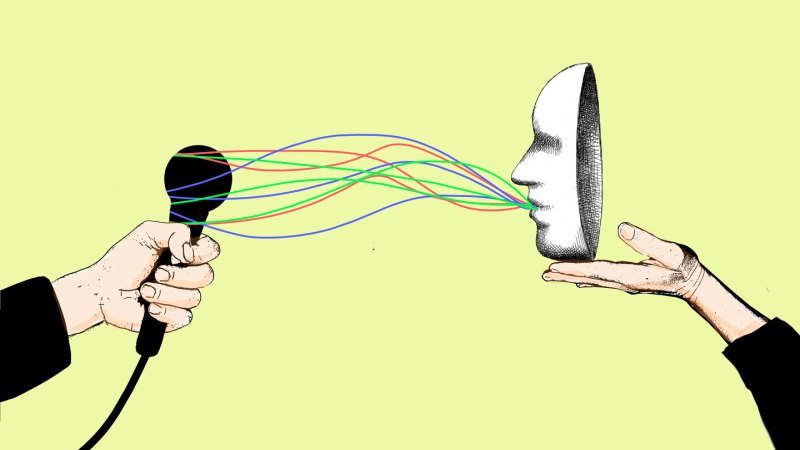

AI technology can create realistic clones of people’s voices. The resulting proliferation of synthetic voices ushers in all sorts of new scenarios, good and bad. “Today, with nothing more than a keyboard and an internet connection, you can type, and you can get an image, a voice, a video of anything, [of] anybody doing or saying anything,” says Hany Farid, a computer scientist at Dartmouth University.
Some of these voice clones are deeply meaningful to people, as in the cases of people who lost their ability to speak. But voice clones can also cause harm, as with scams and deepfakes. And some uses fall into murky gray zones, such as voice clones that “speak” after a person has passed away. What happens to a person’s digital voice after they’re gone?
In this episode of The Deep End: Talk to Me, hear more from Farid, as well as from a former hospital chaplain and AI researcher, and from Jules Rodriguez, a man who communicates with a voice clone. You’ll also hear about a choice Jules made about what will happen to his voice once he’s gone.
Laura Sanders: What’s a voice you like to listen to?
Kate Nilson: That is a great question. I hope my students don’t listen to this. I was having Snoop Dogg read their assignments to me the other day, just because I thought it was funny. But I don’t know if I would say that’s my favorite.
Sanders: That’s speech language pathologist and professor Kate Nilson. And if you’re wondering, this is a real, legitimate thing that anyone can do.
Snoop Dogg audio: Vector mathematics. Think about a car trip. Your displacement from your starting point is a vector.
Sanders: Snoop has partnered with a company called Speechify. If you subscribe, you can get famous voices like Snoop’s, Gwyneth Paltrow, MrBeast to read whatever you want. It turns out people are doing this in all sorts of ways. Here’s Snoop in a marketing video.
Snoop Dogg: I’m glad to be the voice of reason so you can focus better, understand more, and enjoy listening to the internet in the voice of Snoop Dogg.
Sanders: Welcome to The Deep End, Talk To Me. In this episode, we’re stepping out of the lab and into the new digital world we all live in. We’re going to get into some of the good, bad and strange scenarios that come up when voices can be cloned and let loose in the world. Let’s talk about it.
[voices] Hey mom, can I tell you something? Hi. Do you want to talk? That added layer of it being you. Hello? Your voice. Hi. Your voice is you.
Sanders: As we’ve heard in earlier episodes, ultra-realistic voice clones can be extremely meaningful to people who can no longer speak.
Jules Rodriguez: So when I first heard my cloned voice, it felt like I reappeared. When my wife first heard it, she cried because of how close it sounded like me before I lost my voice. I knew of the potential of this technology at that moment.
Sanders: These digital copies of voices have restored connections to their loved ones.
MA Fernandez: You know, the first thing he played for me, I was like chills all over.
Sanders: And even back to themselves.
Patrick Darling: The first time I performed with the AI voice, I was surprised how physically connected I felt with it.
Sanders: These voice clones have been transformative for people who have lost the ability to talk. But the existence of realistic digital copies of voices has effects that ripple farther out into society.
Hany Farid: So here’s where sort of state of the art is. Today, with nothing more than a keyboard and an internet connection, you can type and you can get an image, a voice, a video of anything, anybody doing or saying anything.
Sanders: That’s Hany Farid. He’s a computer scientist at Dartmouth College and cofounder of Get Real Security, a firm that sorts real from fake. I called him to ask how these voice clones have changed our world.
Farid: If you had asked me, I don’t know, five years ago, is this possible? I would say, yeah, maybe, but not anytime soon. And then all of a sudden, boom, it just came out of nowhere.
Sanders: This shift happened in a very, very short amount of time, and it has big implications, both good and bad.
Farid: And so we are living in, I think, in equal parts an exciting time and a terrifying time, and somehow those are coexisting.
Sanders: Farid tells me about some of his research, which asks people to decide whether something, like a voice or a video, is real.
Farid: My bread and butter is developing technologies to distinguish real from fake. And we work with media outlets and law enforcement and courts, et cetera. But one of the questions you always want to ask when you’re in my business is, well, do you need the mathematics and the computation? Just let somebody listen to it or look at it. And can they tell the difference?
Sanders: It turns out they cannot. In laboratory tests, people can’t reliably say whether a voice they hear was created by a machine or by a real living, breathing person.
Farid: It’s essentially like they’re flipping a coin.
Sanders: But there’s another, even higher bar for voice clones to pass. That’s whether they can mimic a specific person well enough to slip by undetected.
Farid: The other question too is what if I, for example, play a real voice sample of your voice, Laura, and then I clone your voice using my favorite AI cloning technology, and then I type something and I get you to say something, and I play those two samples to somebody, and I don’t ask them if it’s real/fake. I say, is this the same person? Is the AI not only able to make something that is natural, but is it identity preserving?
Sanders: Okay, give it a try yourself. Is this the same person?
[Sanders voice clone] And how about now? Is this the same person?
Farid: And when you ask them, is it the same person? They say yes, which means the AI has figured out with roughly 20 seconds or so of your voice how to make their AI sound like you, which is mind-blowing.
Sanders: In the earlier episodes of this season, you’ve heard examples of the good that’s been created by these technological leaps. In many cases, that good comes because these voices are both extremely realistic and extremely good at sounding like a specific person. People want their voice to sound like theirs.
Farid: People with ALS can speak with what sounds like their voice. We’ve seen beautiful examples of that. Translation, right? We can now translate things in real time from any language and it’ll sound like you. I’ve made videos of myself speaking any language I want and it sounds like me, and it’s amazing. It’s really cool.
Sanders: These new ways to connect are very impressive, but as with any technology, these powerful realistic auditory dupes can be repurposed to cause harm.
Farid: Some pretty bad stuff’s happening, right? So let’s just go through a few of these. So first, you’re seeing massive types of fraud. Everything from romance scams to people calling parents and saying your kids have been taken, pay a ransom, to geopolitics. People are getting on calls with who they think are leaders of other countries, and it’s not. It’s a deepfake. It’s an AI-generated voice or face.
Sanders: What Farid is saying feels especially relevant right now. I’m recording this episode in the fall of 2026, and midterm elections in the U.S. are upon us. Political ads are everywhere. Some of these ads use deepfake audio and video to make opponents say or do things they never did. Here are a few recent examples of deepfakes compiled by the New York Times.
[Audio] Hi, I’m Zohran Mamdani and I’m Kathy Hochul and together, we’re making New York, don’t say affordable. I’m voting for Hochul because she basically gave me an early retirement. They stopped prosecuting people for crime, so now I get to sit back and play Candy Crush all day. Is New York getting a little expensive? I’m Kathy Hochul, and I’ve got just the thing. Clinton lover, Trump hater.
Farid: When you can steal somebody’s likeness, their voice, and their face, you can do some damage. We’re seeing people doing content credential resets at companies. They call up and say, oh, I’m employee X. Will you reset my credential? That’s how they’re now attacking companies. We’re seeing North Korean IT workers penetrating Fortune 500 companies by disguising their voices and their accents and their identities. So lots of bad things, and not unpredictably bad.
Sanders: There are romance scams, political scams, employment scams, money scams of all sorts. Farid was even involved in one himself.
Farid: My voice was cloned by an attacker. I was working a very sensitive case with an attorney. Not many people knew about it. And he got a call from my phone number in my voice talking about the case. And after about three minutes, got suspicious, hung up, called me back. Wasn’t me.
Sanders: With the proliferation of AI chatbots to write the scripts for these fake voices, these scams can be deployed on a very large scale. That means there’s no human in the loop except for the person getting scammed. There’s something depressing about the loss of this extremely personal information. And the worst part is that these cloned voices feel like they’re just the latest piece of privacy eroding.
Farid: For a long time, it was our social security numbers, our ability to access our bank accounts were held very tight. And then it’s like, all right, that’s over. Everybody’s got my social security. All the privacy problems of the last 20 years. So we’ve given up what we call PII, personally identifiable information. You can find my phone number, my address, my social security number, everything about me. And that’s true of almost every single American and every person in the world. All right, so that barrier was shattered, whatever, a few years ago. But then we held on to, okay, but I’ve got me, my voice, my likeness. Yeah, not so much. So now imagine that you have all the information you need about you, Laura, me, anybody, and now you can mimic me. Think about how powerful that is. And think about also how helpless I am. I have no control on the billions of calls unfolding every day, every hour, if somebody has co-opted my likeness.
Sanders: Bigger picture, we’ve reached a point where it’s safe to say we can no longer automatically trust digital versions of other people. That applies to the images and sounds on my computer screen as I talked with Farid. Maybe this 2-D picture and sound coming from my laptop is a fake.
Farid: So this two-dimensional version that you and I are sharing now, all right, I can’t control that. That can be stolen. The three-dimensional is right now still me, right? We don’t have the robots that can mimic us. Yet is the end of that sentence.
Sanders: So my interview with Farid was alarming. There are parallels here to any new technology, though. Today, people talk about brain rot from junk online. But remember that television was also going to rot our brains.
[Audio] Its content affects us. So does the sheer weight of the hours we watch.
Sanders: Phones today are the downfall of society, but actual wired telephones encountered really similar resistance when they first started appearing in homes.
[Audio] In Chicago, Sharon Krall’s 15-year-old daughter Angie got so addicted to one teen talk line, she ran up an $850 bill in one month.
Sanders: No big technological advance has escaped this fear.
[Audio] We need teachers who are deeply concerned about how the modern media of communication are changing education.
Sanders: Electricity, bicycles, railways, novels, even the printing press all had their skeptics. So this fear of the new thing has been around a long time. Are synthetic voices created by AI any different? Here’s Karina Nagin from Bridging Voice.
Nagin: Taking off my Bridging Voice hat and just as like a human being in the world, I think there’s a lot of things about AI that I’m very concerned. Deepfakes, the ability to make videos and audio that sound and look just like someone saying something that they’re not saying, I think is a huge, huge concern to our news and public information.
Sanders: Nagin then pivots back to the good, the possibilities here.
Nagin: And then I put on my little hat in my space that I am like, this is how we can harness this to impact people’s lives in our space right now. And I think both conversations need to happen.
Sanders: It occurs to me that I’m seeing the ends of the spectrum here. The stories Farid told me were awful. And the stories that Jules and Casey and others have told me were really, really life-changingly good. Yet these ends of the spectrum are the easy ones. The ones you can look at and say, that’s a horrible way to use this technology. Or that is a powerful and good way to use a voice clone. Between those two poles is the middle ground. That’s the place where Snoop explains cell biology.
[Audio] The membrane separates the material outside the cell.
Sanders: Good, because it’s helping people learn more about mitochondria and who couldn’t use more of that in their lives. Bad, because Snoop never actually said those words, and it’s weird to pretend otherwise.
[Audio] The artists of the Renaissance said that man’s main concern should be for man.
Sanders: There are deepfakes of the late great physicist Richard Feynman delivering famous lectures.
[Audio] The problem is the laws of physics themselves. Let me start with something basic. The next star over from us is called Proxima Centauri.
Sanders: Good because it introduces some amazing physics to people who would otherwise scroll past? Bad because it’s somewhat disrespectful and possibly inaccurate? There aren’t easy answers here. This murky middle gets even murkier with the invention of griefbots. Those are digital versions of people who have passed away. And that means that special voices can keep talking to us long after the body that created them is gone.
I read a poignant post online written by a guy who had lost his dad after years of dementia. He missed his dad’s voice, he wrote, so he cloned it. He paid for the starter pack, submitted three minutes of his dad’s audio, and he wrote, quote, a few minutes later, I had a scarily accurate clone of my dead father’s voice. He goes on to write, quote, my family and I had a good cathartic cry upon hearing the results. I had his cloned voice read the Lord’s Prayer as well as ‘Twas the Night before Christmas. Just hearing his simulated voice again is such a blessing and is helping me in the grief process. End quote.
There are lots of companies now offering this exact thing. A casual search online gets me to a company that sells chats with dead loved ones. There’s a big orange button to click that says bring them back to life. A 2024 documentary called “Eternal You” follows the stories of people as they grapple with this idea. Here’s a little bit of the trailer.
[Audio] We are on the verge of a new era. Hi. It’s like, it’s the funniest thing. It’s like, what’s the first thing you say to someone that’s dead? Like, welcome back.
Sanders: Griefbots or digital avatars of loved ones offer a bridge from the past to the present, a way to remember vividly. But they are also a denial, of sorts, that all life must come to an end.
[Audio] And what I can tell you is that AI really is changing the way that we interact with death.
Sanders: That’s from a 2025 TEDx talk from Dylan Thomas Doyle. He’s a former hospital chaplain, current academic researcher at Northwestern University and self-described philosophy bro. His work explores death and AI.
[Audio] Imagine that you are at a funeral, and you’re sitting there in silent reflection, and all of a sudden, on the back screen in the auditorium, a woman’s face appears. And it’s the face of a woman named Marina. And her hologram, she starts talking to you, and she starts asking you how you’re doing today. And you answer her, and then you ask her a question back. And she responds as if she is still there.
Sanders: I called Doyle to ask about the implications of using technology this way.
Doyle: It was on my radar as a chaplain and a technology researcher, I started thinking through, well, what is the actual impact of this technology on people? So what is it like to hear the voice, in the context of this podcast, the voice of, say, your father who’s passed away while you’re actively grieving their death? And they’re not just repeating what they said or a journal entry in their voice, but like, creating new stories and new relationships through their voice. It gives a lot of people existential ick, is what I’ve heard. And that’s something that I really, I’m curious about.
Sanders: There’s tension here, Doyle tells me.
Doyle: So there’s this push force where you’re like, this is not right. We don’t have the narrative or cultural script to understand what’s going on there. But then as people are beginning to use it, there’s a comfort that comes out of it. So we’re working in that tension space between this comfort that comes, then you’re still dealing with this push away from this technology of it just being weird in a way that people are still grappling with language, I think, to describe.
Sanders: It’s not clear how these types of interactions might affect grieving. They could help or they could hurt.
Doyle: There is this tension between more healthy continuing bonds. So continuing that relationship by, say, writing letters to your dead loved one or, you know, talking out loud to them and continuing that relationship in a positive way that moves us through a healthy grief process and a grief journey. Or hanging on to our relationship with that person to a degree where we can’t actually do any sort of moving on.
Sanders: Doyle points out that we don’t have good data on how many people might be using griefbots.
Doyle: I just don’t want us to get ahead of ourselves when it comes to people like using these. So the capability to do everything we’ve talked about with griefbots is there. But the actual use cases of individuals in their homes using this, it’s still pretty unclear about the adoption of those technologies.
Sanders: But even if griefbots aren’t widespread, the questions they raise aren’t going away. These voices are blurring the lines between a memory and a present-day experience, between alive and dead. Here’s Karina Nagin again.
Nagin: It’s an interesting conversation that we’re having right now of what happens to your voice once you pass away. Some people are starting to integrate this into their wills or their sort of final wishes of, do you want your voice to be able to speak at your own memorial service?
Do you want to have messages saved in your voice that are for your child at graduation that they listen to? Who and when can use that? I think that these are things that people are starting to think about. Who owns your voice? Can your children use your voice to write a speech for their children’s graduation? Or do you want that voice to be deleted once you pass away? Very tricky questions.
Sanders: Rules about who can use voice clones are all over the place. Regulations vary by state and by country, and even companies have their own individual policies in place. There are no clear guidelines, and that makes sense given how young this technology is. Conversations about digital voices and how to use them are inherently very personal. There are as many different takes as there are people. I asked MA if she and Jules had talked about this.
MA: I love that question. Both of us love this question because it’s so important. And we talked about it before he got the trache. Like when he was already using the voice, we were talking about different things in bed at night. And he said, you know, I have a very clear request that my voice like dies with me, basically, that, you know, I ask that you don’t use the voice to keep me alive in any way, that there’s no… And I was like, 100 percent clear. I hadn’t even thought about that. But yeah, it would make sense to be like, I miss him so much. I want to, whatever or. But no, as far as we’re concerned, his voice dies when he does. And his voice will live on in whatever videos or things we captured, whatever he’s left us intentionally. And that’s as far as that goes.
Sanders: So when Jules is gone, his voice will be gone too. But right now is a different story.
MA: Well back in 2021, I was writing an Instagram post about something. It was him playing with Skylar in the backyard while he was already like, you know, had trouble with everything, but he was doing what he could. And I asked him like, you know, what, what do you want to caption it? And he just said that, right here, right now phrase, something else, and like right here, right now. And it became our family mantra. It became something that we wanted to just to share and in both a sense of like do the things that you want to do.
And also something that’s always been big for Jules that I’ve admired him articulate is that it’s not just about, oh, just go forward and do all the things and like suck the marrow out of life. It’s like just also, like, settle. Like it doesn’t have to be that extreme, you know. There’s a beautiful thing about that presence and that settling in. And again, with ALS being something where you’re given the diagnosis, which is terminal, it’s basically a death sentence. Most people are given, you know, two to five years. You don’t know where you’re going to fall in that. We’ve known people that have passed away in a year and a half. We’ve known people that are six years in like Jules, but can still kind of walk around, speak a little bit. ALS touches everybody really differently. So you really don’t know what’s coming. And there’s a lot of like forward thinking that you can do that detaches you from being in your life. So how are you here? And then there’s a lot of backwards, you know, reminiscing and grieving about all the things we’ve lost and how we wish things were different. But then that also takes you out of like this moment right now and this part of your story.
Sanders: This part of the story is the important part. Right here, right now.
On the next and final episode of The Deep End, Talk to Me. We’re going to look at what’s next for Jules and Casey and what’s next for the science racing to give voices back to people.
Vikash Gilja: We can see all the pieces coming together. All of the emphasis, capital, quite frankly, talent focused on advancing AI techniques and technologies. You know, our little corner can benefit from it, right? These tools weren’t available even five years ago.
Sanders: What’s next for the human voice?
Samantha Brosler: Of course, ultimately, we’re hoping to expand this to even larger vocabulary and more range of body movements across the whole body to help allow people more expression in their communication.
This is The Deep End, Talk to Me. I’m Laura Sanders. If you like this podcast tell your friends and leave us a review. It helps the show a lot. Send us your questions and your comments at podcasts@sciencenews.org.
Sanders: The Deep End is a production of Science News. It’s based on original reporting by me, Laura Sanders. This episode was produced and mixed by Ella Rowen. Our project manager is Ashley Yeager. Nancy Shute is our editor in chief. Our music is by Blue Dot Sessions. The podcast is made possible in part by the Burroughs Wellcome Fund with support from PRX.
Sound credits: city park with bicycles and crows in springtime by Garuda1982, printing press spinning wheel.flac by kyles, Turning Pages 01.wav by AudioSea.
This podcast was produced with support from the Burroughs Wellcome Fund and in partnership with PRX. The podcast logo was created by Neil Webb.