Newborn survival improves when families receive financial support

Extra financial support during pregnancy and after birth can help more babies thrive in their earliest days.
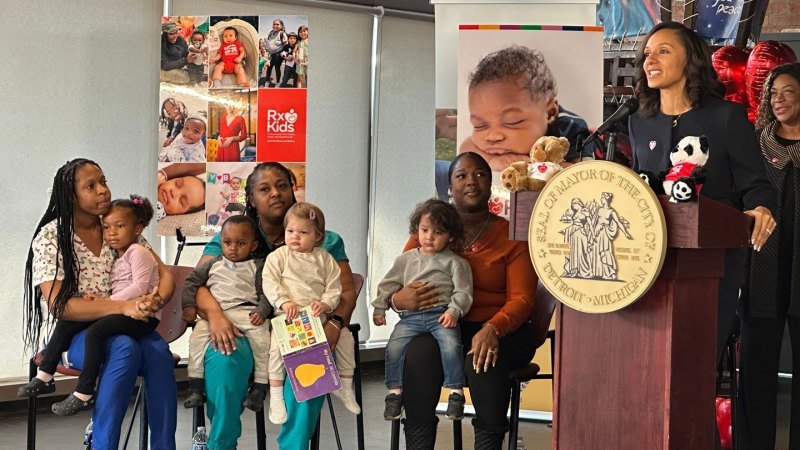
The Rx Kids program in Flint, Mich., launched in January 2024, provides extra cash to pregnant residents and their infants, unconditionally. Researchers compared neonatal deaths — those in the first four weeks of life — in 2025 with those in 2021 through 2024 in Flint. The city’s neonatal mortality rate dropped from 10 deaths per 1,000 live births to 5 deaths per 1,000 live births, researchers report November 2 in JAMA Pediatrics. The early neonatal mortality rate, covering deaths in the first week of life, fell from 8 per 1,000 to 2. For the rest of Michigan, rates were stable over the study’s time period.
“As a pediatrician, there is no outcome more important than babies surviving,” says Mona Hanna of the Michigan State University College of Human Medicine in East Lansing, who is also the founder and director of Rx Kids. “These early findings suggest that something as simple as providing families with financial support during pregnancy and infancy may help save babies’ lives.”
Income tends to drop and expenses rise in the months before and after a birth, making the perinatal period especially difficult financially for many families. Economic precarity can expose moms and babies to health harms. For example, housing instability and homelessness is associated with preterm birth and low birth weight.
Backed by public and private funds, Rx Kids got started in Flint, a city with a high rate of child poverty that has been dealing with the public health fallout of lead contamination in the water distribution system. Nearly 100 percent of the community participates in the program. Flint families receive $1,500 once during pregnancy and $500 per month in the baby’s first year. Anyone who is a resident, at least 16 weeks pregnant or with a newborn up to six months old can enroll. Families have put the extra cash toward diapers, transportation, housing and safe places for their babies to sleep, Hanna says.
“Every day, we hear from moms who tell us, ‘I can breathe’ or ‘A weight has been lifted off my shoulders.’ They tell us they feel less stressed, more hopeful, more supported and more loved,” Hanna says.
The support has had a measurable health impact, with studies linking the program to more access to prenatal care, a decrease in the preterm birth rate and in low-weight births and fewer neonatal intensive care admissions.
Rx Kids has now expanded to dozens of communities in Michigan and Ohio.